
A Simple Overview for New Learners
Understanding the Parts of Speech is one of the most important steps in mastering English grammar. Every word in English belongs to a category based on how it functions in a sentence. These categories are called Parts of Speech.
We will study each one in detail later, but first, here is a clear and simple overview.
1. What Are the Parts of Speech?
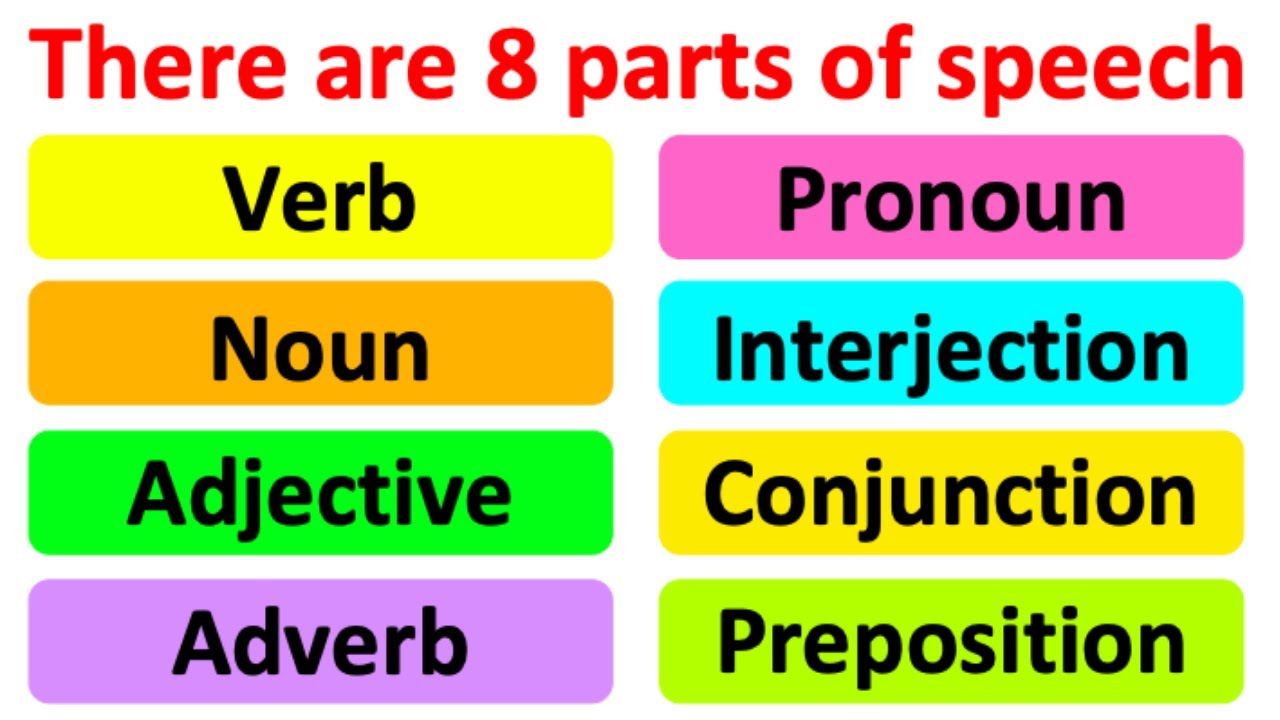
English has eight main parts of speech:
- Nouns
- Pronouns
- Verbs
- Adjectives
- Adverbs
- Prepositions
- Conjunctions
- Interjections
This lesson explains each one briefly with easy examples.
2. The Eight Parts of Speech (Simple Overview)
1. Nouns
Nouns are names of people, places, things, or ideas.
Examples:
- teacher, city, computer, happiness
- India, car, dog, freedom
Example sentences:
- The dog is sleeping.
- She bought a laptop.
2. Pronouns
Pronouns replace nouns to avoid repetition.
Examples:
- I, you, he, she, it, we, they
- mine, yours, his, hers, them
Example sentences:
- She is reading.
- I met them yesterday.
3. Verbs
Verbs express actions or states.
Examples:
- run, eat, read, write
- is, am, are, was, were (state verbs)
Example sentences:
- They play football.
- He is happy.
4. Adjectives
Adjectives describe nouns or pronouns. They give more information.
Examples:
- big, small, beautiful, interesting
- five, blue, expensive
Example sentences:
- She has a beautiful dress.
- It is an easy task.
5. Adverbs
Adverbs describe verbs, adjectives, or other adverbs.
Examples:
- quickly, slowly, very, always, yesterday
Example sentences:
- He runs quickly.
- She is very smart.
6. Prepositions
Prepositions show relationships between words, usually of place, time, or direction.
Examples:
- in, on, at, under, over, between, from, to
Example sentences:
- The book is on the table.
- She came from Mumbai.
7. Conjunctions
Conjunctions connect words, phrases, or clauses.
Examples:
- and, but, or, because, although, so
Example sentences:
- I like tea and coffee.
- He tried hard, but he failed.
8. Interjections
Interjections show emotions or reactions.
Examples:
- Wow! Oh! Hey! Ouch! Hurray!
Example sentences:
- Wow! This is amazing.
- Oh! I forgot my keys.
3. Example Sentences Using Multiple Parts of Speech
- She (pronoun) bought (verb) a new (adjective) phone (noun) yesterday (adverb).
- The cat (noun) is under (preposition) the table (noun).
- I will go home, but (conjunction) I am tired.
- Hey! (interjection) Are you coming?
- He always (adverb) wakes up early (adverb).
4. Exercises
A. Identify the Part of Speech (10 items)
Write what part of speech the bold word is.
- The car is fast.
- She runs every morning.
- They live in Delhi.
- He is very happy.
- Wow! That is beautiful.
- I bought three pens.
- She met them at the station.
- He tried hard, but he failed.
- The weather is cold.
- I will meet you tomorrow.
B. Fill in the Blanks with the Correct Part of Speech (5 items)
Choose a word that fits the required part.
- (noun) She opened the ______.
- (verb) They ______ loudly.
- (adjective) It is a ______ movie.
- (preposition) The bag is ______ the chair.
- (conjunction) I like coffee ______ tea.
C. Rewrite the sentence by replacing the highlighted word (5 items)
Replace the highlighted word with a suitable word from the same part of speech.
- He bought a big car. (replace the adjective)
- She walked quickly. (replace the adverb)
- Rohit is my friend. (replace the noun with a pronoun)
- I like tea, but I don’t like coffee. (replace the conjunction)
- Wow! That was easy. (replace the interjection)
5. Answer Key
A. Identify the Part of Speech
- car – noun
- runs – verb
- in – preposition
- very – adverb
- Wow – interjection
- three – adjective (number adjectives)
- them – pronoun
- but – conjunction
- cold – adjective
- tomorrow – adverb (time)
B. Fill in the Blanks
- door / box / window (any noun)
- shouted / laughed / sang (any verb)
- good / interesting / funny (any adjective)
- under / on / beside (any preposition)
- or
C. Rewrite (Sample Answers)
- He bought a large car.
- She walked slowly.
- He is my friend.
- I like tea, and I don’t like coffee.
- Oh! That was easy.