
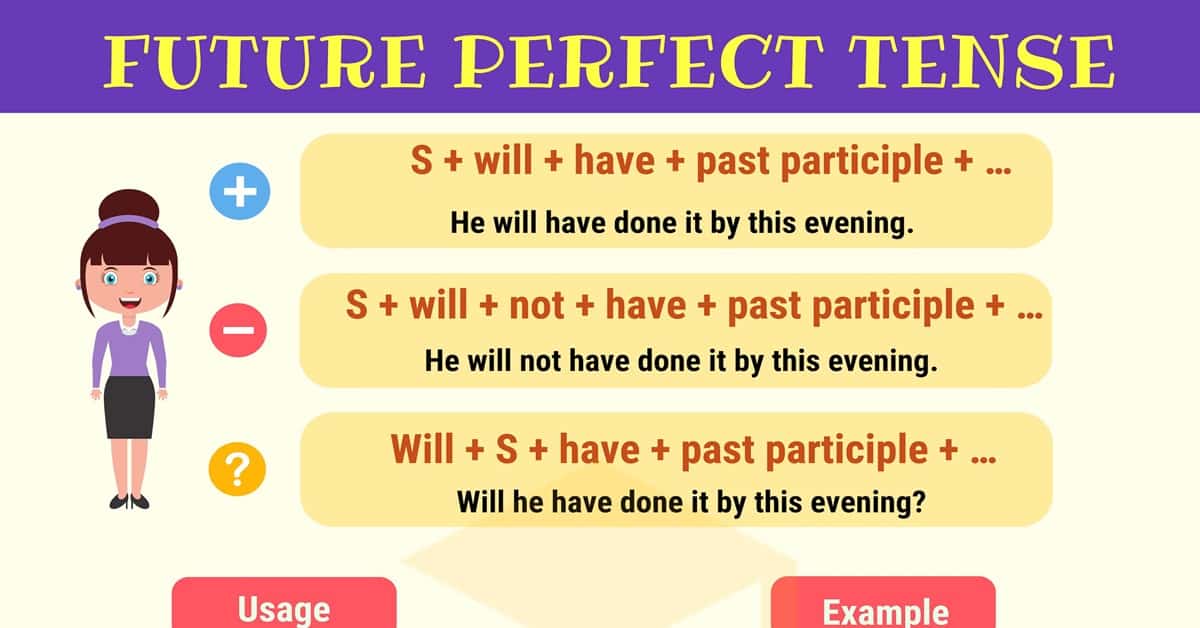
The Future Perfect Tense is used to talk about an action that will be completed before a specific time in the future.
The focus is on completion, not duration.
I. WHEN DO WE USE THE FUTURE PERFECT TENSE?
Use the Future Perfect Tense when:
- An action will finish before a future time
- An action will be completed before another future action
- We want to show results by a future deadline
Examples:
- I will have finished the course by June.
- She will have submitted the report before the meeting.
II. FORM OF THE FUTURE PERFECT
Basic Structure
Subject + will have + V3 (past participle)
Same for all subjects:
- I / You / He / She / We / They → will have
Examples:
- They will have completed the syllabus.
- He will have learned the basics.
III. SENTENCE STRUCTURES (ALL 4 TYPES)
A. Positive Sentences
Structure:
Subject + will have + V3
Examples:
- I will have finished my work.
- She will have improved her English.
- We will have completed the lesson.
B. Negative Sentences
Structure:
Subject + will not have + V3
(will not have = won’t have)
Examples:
- I will not have finished the task.
- He won’t have prepared the notes.
- They will not have arrived on time.
C. Positive Questions
Structure:
Will + subject + have + V3?
Examples:
- Will you have completed the course?
- Will she have submitted the form?
- Will they have practiced enough?
D. Negative Questions
Structure:
Won’t + subject + have + V3?
Examples:
- Won’t you have finished by tomorrow?
- Won’t she have learned the basics?
- Won’t they have prepared everything?
IV. USES OF THE FUTURE PERFECT
1. Completion Before a Future Time
Examples:
- I will have completed the course by March.
- She will have written the exam by Friday.
2. Completion Before Another Future Action
Examples:
- We will have finished the lesson before the test starts.
- They will have practiced before the interview.
3. Showing Results by a Deadline
Examples:
- By next year, he will have gained confidence.
- By tonight, we will have revised all topics.
V. TIME EXPRESSIONS USED
Common time words:
- by tomorrow
- by next week / month / year
- before
- in two hours
- by the time
Examples:
- She will have left by 6 pm.
- We will have completed it by the time you arrive.
VI. FUTURE PERFECT vs FUTURE CONTINUOUS
| Future Continuous | Future Perfect |
|---|---|
| Action in progress | Action completed |
| will be doing | will have done |
| Focus on duration | Focus on result |
Example:
- At 8 pm, I will be studying.
- By 8 pm, I will have studied.
VII. COMMON MISTAKES
❌ I will have finish the work.
✅ I will have finished the work.
❌ Will you have went there?
✅ Will you have gone there?
❌ She will has completed it.
✅ She will have completed it.
VIII. EXERCISES
A. Choose the correct form
- I ___ (will finish / will have finished) the work by tonight.
- She ___ (will have completed / will complete) the course by June.
- They ___ (will have left / will leave) before the meeting starts.
- We ___ (will have revised / will revise) all chapters by tomorrow.
- He ___ (will have learned / will learn) the basics by next week.
- I ___ (will have sent / will send) the email by evening.
- She ___ (will have arrived / will arrive) before 10 am.
- They ___ (will have practiced / will practice) enough by then.
- We ___ (will have finished / will finish) before the deadline.
- He ___ (will have prepared / will prepare) the notes by morning.
B. Make negative sentences
- I will have completed the course.
- She will have submitted the form.
- They will have finished the project.
- He will have prepared the speech.
- We will have revised all topics.
- I will have learned the basics.
- She will have arrived early.
- They will have followed instructions.
- He will have improved his English.
- We will have achieved the goal.
C. Make positive questions
- You will have finished the lesson.
- She will have completed the course.
- They will have submitted the assignment.
- He will have prepared the report.
- We will have revised everything.
- She will have learned the rules.
- You will have arrived on time.
- They will have practiced enough.
- He will have improved his skills.
- We will have completed the syllabus.
D. Make negative questions
- You will have completed the task.
- She will have prepared well.
- They will have followed instructions.
- He will have arrived early.
- We will have finished the work.
- She will have learned the basics.
- You will have practiced enough.
- They will have revised properly.
- He will have improved his English.
- We will have met the deadline.
IX. ANSWER KEY
A. Correct form
- will have finished
- will have completed
- will have left
- will have revised
- will have learned
- will have sent
- will have arrived
- will have practiced
- will have finished
- will have prepared
B. Negative sentences
- I will not have completed the course.
- She will not have submitted the form.
- They will not have finished the project.
- He will not have prepared the speech.
- We will not have revised all topics.
- I will not have learned the basics.
- She will not have arrived early.
- They will not have followed instructions.
- He will not have improved his English.
- We will not have achieved the goal.
C. Positive questions
- Will you have finished the lesson?
- Will she have completed the course?
- Will they have submitted the assignment?
- Will he have prepared the report?
- Will we have revised everything?
- Will she have learned the rules?
- Will you have arrived on time?
- Will they have practiced enough?
- Will he have improved his skills?
- Will we have completed the syllabus?
D. Negative questions
- Won’t you have completed the task?
- Won’t she have prepared well?
- Won’t they have followed instructions?
- Won’t he have arrived early?
- Won’t we have finished the work?
- Won’t she have learned the basics?
- Won’t you have practiced enough?
- Won’t they have revised properly?
- Won’t he have improved his English?
- Won’t we have met the deadline?
X. KEY TAKEAWAYS
- Use will have + V3
- Focus is on completion before a future time
- Commonly used with by / before / by the time
- V3 form is essential (regular or irregular)