
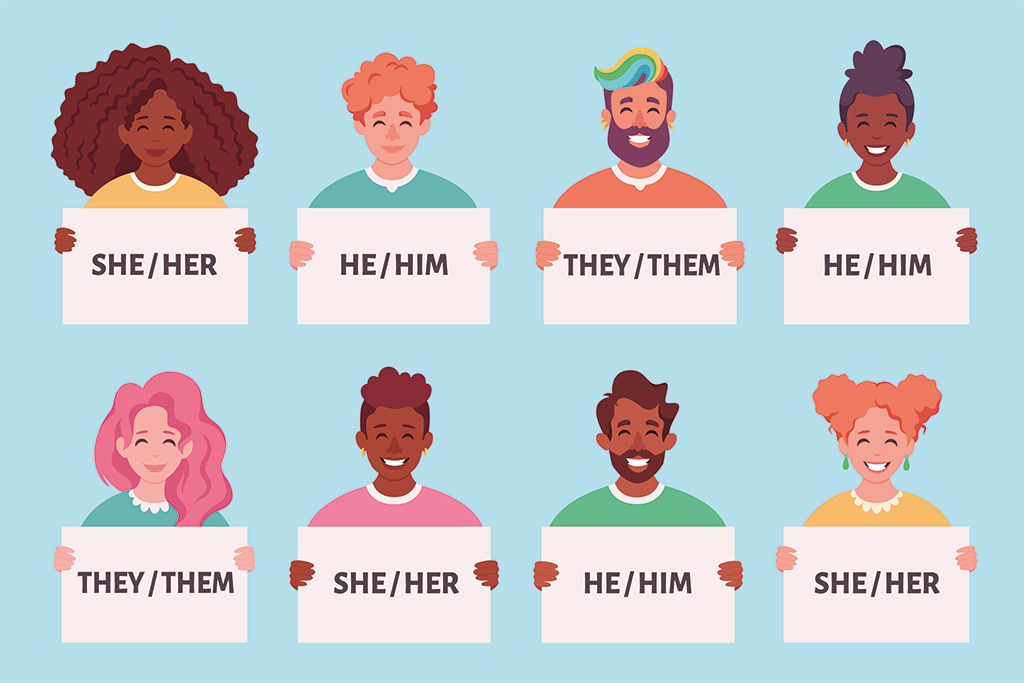
Pronouns are essential in English because they help us avoid repeating the same nouns again and again. They make sentences smoother, shorter, and more natural.
This lesson gives a detailed but easy introduction to pronouns, suitable for new learners.
1. What Is a Pronoun?
A pronoun is a word that replaces a noun.
Examples:
- Rita is tired. → She is tired.
- I saw the car. → I saw it.
- Rahul and I are friends. → We are friends.
Pronouns help us talk about people, things, and ideas without repeating names.
2. Why Are Pronouns Important?
Without pronouns, sentences become too long:
- Rohan said that Rohan will call Rohan’s mother when Rohan reaches home.
With pronouns:
- He said that he will call his mother when he reaches home.
Clear, short, and natural.
3. Types of Pronouns
We will study them deeply later, but here is a simple introduction.
1. Personal Pronouns
Used to talk about people or things.
Subject Pronouns (do the action):
I, you, he, she, it, we, they
Example:
- She is reading.
Object Pronouns (receive the action):
me, you, him, her, it, us, them
Example:
- He called me.
2. Possessive Pronouns
Show ownership.
Independent Possessives: mine, yours, his, hers, ours, theirs
Example:
- This bag is mine.
Possessive Adjectives (not pronouns, but related): my, your, his, her, its, our, their
Example:
- This is my book.
3. Reflexive Pronouns
Used when the subject and object are the same person.
myself, yourself, himself, herself, itself, ourselves, yourselves, themselves
Example:
- She made the cake herself.
4. Demonstrative Pronouns
Used to point to specific things.
this, that, these, those
Examples:
- This is my phone.
- Those are your shoes.
5. Interrogative Pronouns
Used to ask questions.
who, whom, whose, what, which
Examples:
- Who is calling?
- Which is your car?
6. Relative Pronouns
Connect clauses.
who, whom, whose, which, that
Example:
- The man who lives next door is a doctor.
7. Indefinite Pronouns
Refer to people/things in a general way.
anyone, someone, everyone, nobody, something, everything, many, few, some
Examples:
- Someone called you.
- Many were missing.
4. Pronouns in Sentences
Example 1
Original:
- The teacher is kind. The teacher gave me homework.
With pronouns: - The teacher is kind. She gave me homework.
Example 2
Original:
- I met Rita and Mehul. I like Rita and Mehul.
With pronouns: - I met them. I like them.
5. Pronoun Table
| Function | Pronouns |
|---|---|
| Subject | I, you, he, she, it, we, they |
| Object | me, you, him, her, it, us, them |
| Possessive | mine, yours, his, hers, ours, theirs |
| Reflexive | myself, yourself, himself, herself, itself, ourselves, yourselves, themselves |
| Demonstrative | this, that, these, those |
| Interrogative | who, whom, whose, what, which |
| Relative | who, which, that |
| Indefinite | someone, anyone, everyone, something, nothing, few, many |
6. Common Pronoun Mistakes
- He / Him confusion
Incorrect: Him is my friend.
Correct: He is my friend. - They / Them confusion
Incorrect: Them are coming.
Correct: They are coming. - Using “its” vs “it’s”
its = possession
it’s = it is
Example:
- The dog wagged its tail.
- It’s raining today.
7. Exercises
A. Choose the correct pronoun
- _____ am going to the market. (I / me)
- She gave the keys to _____. (he / him)
- This is my bag. The red one is _____. (mine / my)
- They enjoyed _____ at the party. (themselves / them)
- _____ is your favourite movie? (Which / Whose)
- The boy _____ won the race is my brother. (who / what)
- Is _____ your pen? (this / these)
- _____ called me yesterday. (Someone / Something)
B. Fill in the blanks with a pronoun
- Riya is kind. Everyone likes _____.
- My friends and I are going. Do you want to join _____?
- I saw a dog. _____ was barking loudly.
- They made the food _____.
- I know the girl _____ lives next door.
- _____ of these books is yours?
C. Replace the noun with a pronoun
- I called Rakesh.
- The gift is for my sister.
- Rahul and I will visit you.
- I spoke to the manager.
- The teacher scolded the boys.
- This mobile phone is expensive.
8. Answer Key
A. Choose the correct pronoun
- I
- him
- mine
- themselves
- Which
- who
- this
- Someone
B. Fill in the blanks
- her
- us
- It
- themselves
- who / that
- Which
C. Replace the noun with a pronoun
- I called him.
- The gift is for her.
- We will visit you.
- I spoke to him / her.
- The teacher scolded them.
- It is expensive.