
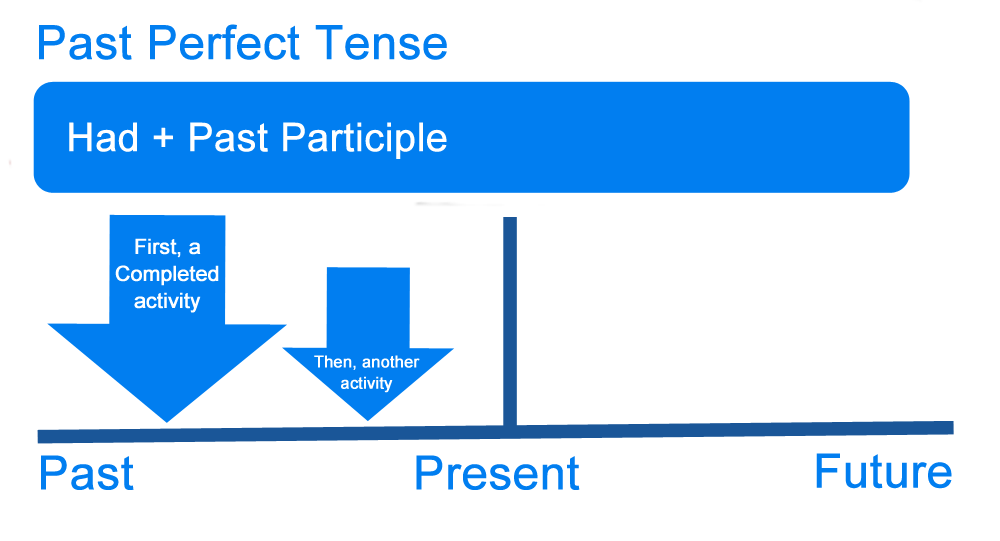
The Past Perfect Tense is used to talk about an action that was completed before another action or time in the past.
In simple terms:
One action happened first → Past Perfect
Another action happened later → Simple Past
I. WHEN DO WE USE THE PAST PERFECT TENSE?
Use the Past Perfect when:
- One past action happened before another past action
- The earlier action needs to be clearly shown
- Talking about cause and effect in the past
Examples:
- I had finished the work before he arrived.
- She had left when I reached the office.
II. FORM OF THE PAST PERFECT TENSE
Basic Structure
Subject + had + V3 (past participle)
Same for all subjects:
- I / You / He / She / We / They → had
Examples:
- I had completed the task.
- They had already eaten dinner.
III. SENTENCE STRUCTURES (ALL 4 TYPES)
A. Positive Sentences
Structure:
Subject + had + V3
Examples:
- I had studied before the test.
- She had taken the notes.
- They had finished the project.
B. Negative Sentences
Structure:
Subject + had + not + V3
Examples:
- I had not prepared well.
- He hadn’t arrived on time.
- We had not understood the instructions.
C. Positive Questions
Structure:
Had + subject + V3?
Examples:
- Had you completed the work?
- Had she left already?
- Had they checked the details?
D. Negative Questions
Structure:
Had + subject + not + V3?
Examples:
- Hadn’t you informed them?
- Hadn’t she submitted the form?
- Hadn’t they finished earlier?
IV. USES OF THE PAST PERFECT TENSE
1. Earlier of Two Past Actions
Examples:
- I had locked the door before I left.
- She had called him when the meeting ended.
2. Cause and Effect in the Past
Examples:
- He failed because he had not studied.
- She was tired because she had worked all night.
3. Reported Speech (Backshift)
Examples:
- He said that he had completed the task.
- She explained that she had missed the bus.
4. Unreal or Imagined Past Situations
Examples:
- If I had known, I would have helped.
- She wished she had studied harder.
V. TIME EXPRESSIONS USED
Common words:
- before
- after
- already
- by the time
- when
Examples:
- We had left before the rain started.
- She had finished by the time I arrived.
VI. PAST PERFECT VS SIMPLE PAST
| Past Perfect | Simple Past |
|---|---|
| Earlier action | Later action |
| had finished | finished |
| Shows sequence clearly | May be unclear |
Example:
- When I arrived, she had already left.
VII. COMMON MISTAKES
❌ I had went there.
✅ I had gone there.
❌ Had you did the work?
✅ Had you done the work?
❌ She had not went home.
✅ She had not gone home.
VIII. EXERCISES
A. Choose the correct form
- She ___ (had / has) finished before I arrived.
- They ___ (had / have) already left.
- I ___ (had / was) completed the task.
- He ___ (had / did) not informed me.
- We ___ (had / were) eaten dinner.
- She ___ (had / was) taken notes.
- They ___ (had / have) checked the report.
- I ___ (had / did) not understood the rule.
- He ___ (had / was) reached home early.
- We ___ (had / were) decided earlier.
B. Make negative sentences
- She had finished the work.
- I had prepared well.
- They had followed instructions.
- He had submitted the form.
- We had checked the details.
- She had taken the exam.
- I had eaten lunch.
- They had arrived early.
- He had informed us.
- We had completed the task.
C. Make positive questions
- You had completed the work.
- She had left already.
- They had checked the files.
- He had arrived on time.
- We had prepared well.
- She had understood the lesson.
- You had seen the message.
- They had taken notes.
- He had finished earlier.
- We had informed the team.
D. Make negative questions
- You had studied properly.
- She had submitted the assignment.
- They had completed the project.
- He had informed the manager.
- We had prepared the report.
- She had followed instructions.
- You had checked the email.
- They had reached on time.
- He had taken permission.
- We had understood the rules.
IX. ANSWER KEY
A. Correct form
- had
- had
- had
- had
- had
- had
- had
- had
- had
- had
B. Negative sentences
- She had not finished the work.
- I had not prepared well.
- They had not followed instructions.
- He had not submitted the form.
- We had not checked the details.
- She had not taken the exam.
- I had not eaten lunch.
- They had not arrived early.
- He had not informed us.
- We had not completed the task.
C. Positive questions
- Had you completed the work?
- Had she left already?
- Had they checked the files?
- Had he arrived on time?
- Had we prepared well?
- Had she understood the lesson?
- Had you seen the message?
- Had they taken notes?
- Had he finished earlier?
- Had we informed the team?
D. Negative questions
- Hadn’t you studied properly?
- Hadn’t she submitted the assignment?
- Hadn’t they completed the project?
- Hadn’t he informed the manager?
- Hadn’t we prepared the report?
- Hadn’t she followed instructions?
- Hadn’t you checked the email?
- Hadn’t they reached on time?
- Hadn’t he taken permission?
- Hadn’t we understood the rules?
X. KEY TAKEAWAYS
- Use had + V3
- Shows earlier past action
- Same form for all subjects
- Often used with before / after / by the time
- Essential for clear storytelling