
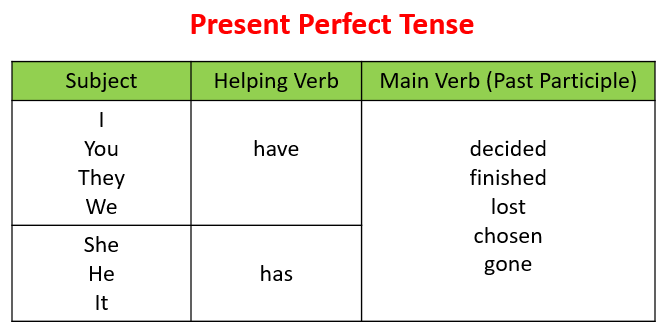
The Present Perfect Tense is used to talk about past actions that are connected to the present.
It focuses on result, experience, or unfinished time, not on the exact time in the past.
I. WHAT IS THE PRESENT PERFECT TENSE?
Use the Present Perfect when:
- The action happened in the past, but the result is important now
- The time is not mentioned or not important
- The action started in the past and continues until now
Example:
- I have finished my homework. (result now)
- She has lived here for five years. (still lives here)
II. FORM OF PRESENT PERFECT
Basic Structure
Subject + has / have + past participle (V3)
| Subject | Auxiliary |
|---|---|
| I / You / We / They | have |
| He / She / It | has |
Examples:
- I have eaten lunch.
- He has completed the course.
III. PRESENT PERFECT WITH “HAVE / HAS” (AUXILIARY VERBS)
A. Positive Sentences
Structure:
Subject + has / have + past participle
Examples:
- I have visited Delhi.
- She has finished her work.
- They have joined the course.
B. Negative Sentences
Structure:
Subject + has / have + not + past participle
Examples:
- I have not completed the task.
- He has not arrived yet.
- We haven’t started the class.
C. Positive Questions
Structure:
Has / Have + subject + past participle?
Examples:
- Have you finished the lesson?
- Has she submitted the assignment?
- Have they reached home?
D. Negative Questions
Structure:
Has / Have + subject + not + past participle?
Examples:
- Haven’t you completed the work?
- Hasn’t he called you yet?
- Haven’t they informed you?
IV. USES OF PRESENT PERFECT (WITH EXAMPLES)
1. Completed Action with Present Result
The action is finished, but the result matters now.
Examples:
- I have lost my keys. (I can’t find them now)
- She has broken her phone. (It doesn’t work now)
2. Life Experience (Ever / Never)
Used to talk about experiences at any time in life.
Examples:
- I have visited Goa.
- She has never tried sushi.
Questions:
- Have you ever traveled abroad?
3. Unfinished Time (Today, This Week, This Year)
Used when the time period is not finished.
Examples:
- I have met him today.
- We have had three classes this week.
4. Action Started in Past and Continuing Now
Often used with for and since.
Examples:
- She has lived here for ten years.
- I have worked at Ascendia since 2022.
5. Recent Past (Just / Already / Yet)
Examples:
- I have just finished my work.
- She has already left.
- Have you finished yet?
V. TIME EXPRESSIONS USED WITH PRESENT PERFECT
Common signal words:
- ever, never
- already, just, yet
- for, since
- recently, lately
- today, this week, this month
VI. PRESENT PERFECT VS PAST SIMPLE
| Present Perfect | Past Simple |
|---|---|
| No exact time | Exact time |
| Connection to now | Finished in past |
| I have seen him | I saw him yesterday |
❌ I have seen him yesterday
✅ I saw him yesterday
VII. COMMON MISTAKES
❌ I have ate food.
✅ I have eaten food.
❌ She has went home.
✅ She has gone home.
❌ Did you finish your work? (unfinished time)
✅ Have you finished your work?
VIII. EXERCISES
A. Choose the correct form
- She ___ (has / have) completed the course.
- I ___ (have / has) seen that movie.
- They ___ (have / has) arrived safely.
- He ___ (has / have) not called yet.
- We ___ (have / has) finished our homework.
- She ___ (has / have) never visited Mumbai.
- I ___ (have / has) just eaten lunch.
- They ___ (has / have) joined the class.
- He ___ (has / have) worked here for years.
- We ___ (have / has) not started yet.
B. Make negative sentences
- She has submitted the form.
- I have finished my homework.
- They have arrived on time.
- He has informed the manager.
- We have completed the lesson.
- She has read the email.
- I have booked the tickets.
- They have paid the fees.
- He has learned the rules.
- We have started the meeting.
C. Make positive questions
- You have completed the task.
- She has joined the course.
- They have reached home.
- He has called you.
- We have finished the class.
- She has ever visited Delhi.
- You have seen this movie.
- They have already eaten.
- He has worked here since 2020.
- We have discussed the plan.
D. Make negative questions
- You have completed the assignment.
- She has sent the email.
- They have paid the bill.
- He has arrived yet.
- We have started the project.
- She has informed you.
- You have ever tried this dish.
- They have booked the tickets.
- He has finished the report.
- We have received the message.
IX. ANSWER KEY
A. Choose the correct form
- has
- have
- have
- has
- have
- has
- have
- have
- has
- have
B. Negative sentences
- She has not submitted the form.
- I have not finished my homework.
- They have not arrived on time.
- He has not informed the manager.
- We have not completed the lesson.
- She has not read the email.
- I have not booked the tickets.
- They have not paid the fees.
- He has not learned the rules.
- We have not started the meeting.
C. Positive questions
- Have you completed the task?
- Has she joined the course?
- Have they reached home?
- Has he called you?
- Have we finished the class?
- Has she ever visited Delhi?
- Have you seen this movie?
- Have they already eaten?
- Has he worked here since 2020?
- Have we discussed the plan?
D. Negative questions
- Haven’t you completed the assignment?
- Hasn’t she sent the email?
- Haven’t they paid the bill?
- Hasn’t he arrived yet?
- Haven’t we started the project?
- Hasn’t she informed you?
- Haven’t you ever tried this dish?
- Haven’t they booked the tickets?
- Hasn’t he finished the report?
- Haven’t we received the message?
X. KEY TAKEAWAYS
- Present Perfect = has / have + past participle
- Focus is on result, experience, or unfinished time
- Do not use exact past time words
- Use for (duration) and since (starting point)
- Questions and negatives use has / have, not did